
Last updated: May 2026
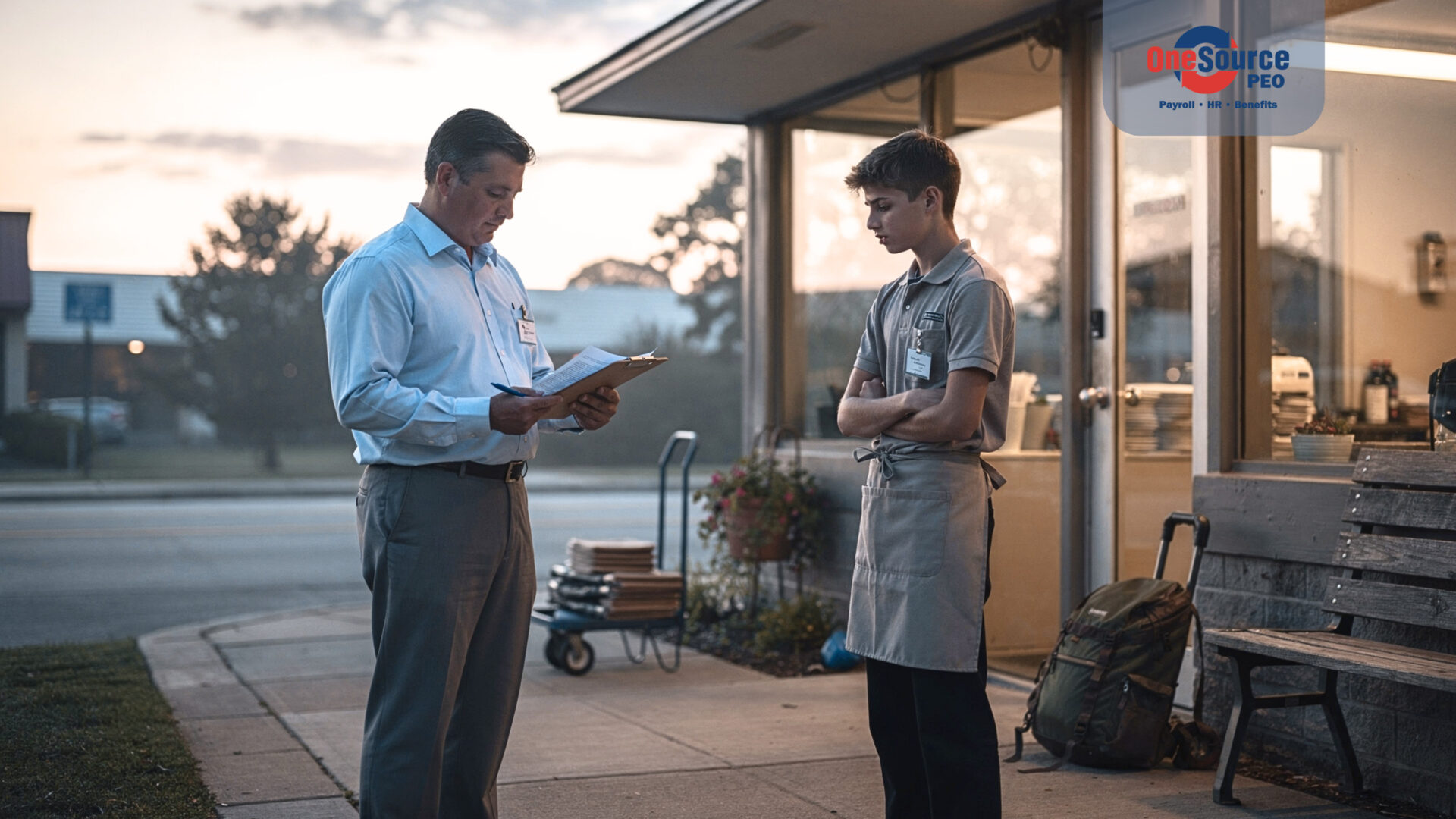
Summer hiring season runs from April planning through September wind-down for most small businesses across Georgia and the Southeast. Restaurants, retail, landscaping, summer camps, and event venues ramp up teen and seasonal staff between now and Memorial Day. Many of these hires carry compliance risk that owners do not see until a complaint, a payroll audit, or a workers’ compensation claim makes it visible. The Department of Labor’s Wage and Hour Division opens hundreds of youth employment investigations every year and recovers millions in back wages and civil money penalties. The rules are not complicated. They just rarely get read before the first paycheck.
Who Can Work, and When
Federal child labor rules under the Fair Labor Standards Act set clear limits. Fourteen is the minimum working age for most non-agricultural jobs. The DOL Wage and Hour Division YouthRules specify that 14- and 15-year-olds can work up to 3 hours on a school day, 18 hours in a school week, 8 hours on a non-school day, and 40 hours in a non-school week. Between June 1 and Labor Day, their evening cutoff moves from 7 p.m. to 9 p.m. Sixteen- and 17-year-olds face no federal hour limits, but they still cannot perform work on the DOL hazardous occupations list, which covers roofing, most power-driven machinery, meat processing, demolition, and many roles involving motor vehicles.
State Rules Can Be Stricter
Federal law sets a floor, not a ceiling. The DOL state child labor comparison shows Georgia, Tennessee, South Carolina, and Alabama each layer their own requirements on top of federal rules. Georgia requires an employment certificate for workers under 16 and applies additional documentation rules at the Department of Labor certification level. Multi-state employers must comply with whichever rule is stricter for each work location, not the state of payroll origin.
Seasonal Does Not Mean Exempt
A common mistake is treating seasonal staff as contractors or as exempt from standard payroll rules. A summer hire is an employee under the Fair Labor Standards Act. That means overtime after 40 hours unless a specific exemption applies, I-9 verification within three business days of the first day worked, accurate time records, and state unemployment and workers’ compensation contributions. The DOL guidance on worker misclassification makes clear that labeling a worker as a 1099 because the job is short does not change their status if the employer controls schedule, tools, and methods.
Employers may pay a youth minimum wage of $4.25 per hour for the first 90 consecutive calendar days to workers under 20, after which the full federal minimum of $7.25 applies. Georgia follows the federal minimum. The 90-day clock runs in calendar days, not working days, and a worker’s second employer within those 90 days can also use the rate.
What to Have in Place Before the First Day
Six items protect the business. First, a written job description that matches the actual duties, cross-checked against the hazardous occupations list for any role involving a worker under 18. Second, a signed state work permit where required. Third, an onboarding packet that captures the I-9 supporting documents, the W-4, and the state withholding form on the first day. Fourth, a time-keeping method that captures start, stop, and break time for every shift, including minor-specific break requirements where state law applies. Fifth, a clear rest and meal policy written into the offer letter, not buried in a handbook. Sixth, a workers’ compensation policy that specifically extends to seasonal staff. Small-employer policies sometimes exclude them unless the endorsement is added. NFIB guidance on youth labor rules offers a useful pre-season checklist for small employers walking through these items for the first time.
Hiring for cash and handing out a 1099 at the end of August remains the single most common and most costly mistake in seasonal employment. Misclassification and minor-hour violations together drive a large share of the DOL actions against small employers every year.
Why the Southeast Sees More Seasonal Risk Than Most Regions
Georgia, Tennessee, South Carolina, and Alabama run longer effective summer seasons than most of the country, with school calendars that release students in mid-May and return in early August. That widens the window for teen hiring and, with it, the opportunity for hour violations that stack up over 10 to 12 weeks. Warehousing, tourism, and food service bear the largest share of that volume across the region. Employers that run on thin seasonal margins often cut compliance steps first when the hiring surge hits, which is exactly when the DOL and state labor departments watch most closely.
Three quick wins reduce risk without slowing hiring. First, build minor-specific hour rules directly into the scheduling software so a 14-year-old cannot be scheduled past 9 p.m. in June, July, or August. Second, require hiring managers to list the role on a central tracker with age category, permit status, and hazardous-work flag before the employee starts. Third, audit the seasonal roster in mid-July, halfway through the peak, to catch any minor who has drifted into extended shifts or hazardous tasks before the violation ages.
The OneSource View
OneSource PEO handles the compliance infrastructure that most small businesses do not have time to build. That includes I-9 and E-Verify processing on day one, state-specific minor permit tracking, hazardous-occupation job code review, and workers’ compensation coverage that automatically extends to seasonal hires. If you are hiring teens, interns, or short-term seasonal staff before Memorial Day, we can walk your hiring lead through a 30-minute compliance check that flags gaps before they become complaints. Many of our Georgia clients ramp up 40 to 100 seasonal workers each summer, and our process is built for that cadence.
onesourcepeo.com | service@onesourcepeo.com | (678) 990-8630